Maine Hiking Acadia 8 Scenic Routes Perfect for Beginners
Picture this: rugged granite peaks rising dramatically from the Atlantic Ocean, creating a landscape where mountain summits meet crashing waves in perfect harmony. This is Maine hiking Acadia at its finest – a unique wilderness experience where visitors can watch sunrise from a mountain peak and explore tide pools along rocky shores all in the…
Picture this: rugged granite peaks rising dramatically from the Atlantic Ocean, creating a landscape where mountain summits meet crashing waves in perfect harmony. This is Maine hiking Acadia at its finest – a unique wilderness experience where visitors can watch sunrise from a mountain peak and explore tide pools along rocky shores all in the same day.
Acadia National Park holds the distinguished honour of being the first U.S. national park east of the Mississippi River and the only national park in the Northeastern United States. With over two million visitors annually drawn to its spectacular beauty, this coastal gem represents the pinnacle of Maine hiking Acadia adventures.
This comprehensive guide covers everything you need to master Acadia hikes, from essential planning information and crowd-avoidance strategies to detailed trail recommendations and safety tips. Whether you’re seeking challenging scrambles up iron rungs or peaceful strolls around pristine lakes, you’ll discover how to maximize your visit while experiencing the diverse landscapes that make Acadia extraordinary.
Acadia’s remarkable diversity encompasses 158 miles of hiking and mountain biking routes winding through freshwater lakes, lush forests, estuaries, and rocky intertidal zones. From the highest peak on the East Coast’s Atlantic shore to hidden waterfalls and historic carriage roads, the best hikes in Acadia National Park offer something spectacular for every adventurer.
Table of Contents
Table of Contents
Planning Your Acadia Adventure: Essential Information Before You Go
Strategic planning transforms a good Maine hiking Acadia experience into an unforgettable one, especially given the park’s popularity and seasonal variations.
Best Time to Visit Acadia: Seasonal Highlights & Considerations
Spring (May-early June) delivers moderate temperatures and fewer crowds, making it ideal for popular Acadia hikes like Beehive Loop, Gorham Mountain Loop, Jordan Pond Path, Cadillac North Ridge Trail, and Great Head Trail. Wildflowers bloom throughout the park, and many trails remain accessible despite occasional muddy conditions.
Summer represents peak season with excellent hiking conditions but maximum congestion. The best hikes in Acadia National Park during summer include Beehive Loop, Jordan Pond Path, Cadillac North Ridge Trail, Gorham Mountain Loop, and Ocean Path Trail. Early morning starts have become essential for parking and crowd avoidance.
Fall (late September-October) showcases vibrant foliage that transforms Maine hiking Acadia into a photographer’s paradise. Popular autumn trails include Beehive Loop, Precipice Loop (when open), Jordan Pond Path, Gorham Mountain Loop, and Cadillac North Ridge Trail. The stunning leaf displays create some of the year’s most spectacular hiking conditions.
Winter offers unique activities like cross-country skiing, snowshoeing, snowmobiling on paved loop roads, and ice fishing on frozen ponds and lakes. Winter Acadia hikes include Cadillac North Ridge Trail, Beehive Loop Trail, Jordan Pond Path, Cadillac South Ridge Trail, and Gorham Mountain Loop, each providing distinctly different experiences in snowy conditions.
Acadia’s warm-summer humid continental climate creates distinct seasonal variations that dramatically influence hiking conditions and crowd levels throughout the year.
Getting There & Getting Around Acadia
Located on Maine’s mid-coast southwest of Bar Harbor, Acadia encompasses Mount Desert Island, Schoodic Peninsula, and Isle au Haut. The park’s accessibility makes Maine hiking Acadia adventures convenient for visitors from throughout the Northeast.
The 27-mile Park Loop Road serves as the primary scenic route, generally open from April 15 to December 1. A 2-mile section from Schooner Head Road to Sand Beach and Otter Cliff remains plowed year-round. Vehicle reservations are required for Cadillac Mountain summit road from May 21–October 26, adding a crucial planning element for Acadia hikes.
Free Island Explorer shuttle buses run from June to early October, providing wheelchair-accessible transportation that significantly reduces parking stress. These buses serve most major trailheads but don’t reach Cadillac Mountain.
Bangor International Airport (42 miles, approximately 1 hour 15 minutes to Bar Harbour) and Hancock County-Bar Harbor Airport (12 miles, approximately 20 minutes) provide convenient access for visitors planning Maine hiking Acadia adventures.
Entrance Fees & Passes
Planning your budget for the best hikes in Acadia National Park requires understanding the fee structure:
- Private Vehicle Pass: $35 for seven days, covering all occupants
- Motorcycle Pass: $30 for seven days, covering one or two passengers
- Per Person Pass: $20 for seven days (hikers, bicyclists, pedestrians), with youth 15 and under free
- Acadia Annual Pass: $70, valid only at Acadia for 12 months
- America the Beautiful Pass: $80, providing access to over 2,000 federal recreation sites nationwide
Fee-free days include MLK Jr. Day, National Park Week, Juneteenth, Great American Outdoors Act Anniversary, National Public Lands Day, and Veterans Day. Educational fee waivers and non-commercial group fees also apply.
Where to Stay: Camping & Lodging Options
Accommodation choices significantly impact your Maine hiking Acadia experience. NPS campgrounds include Blackwoods Campground (open year-round, primitive walk-in during winter), Seawall Campground, and Schoodic Woods Campground (newest, opened 2015).
Duck Harbor Campground on Isle au Haut offers five lean-to sites for a remote island experience. Eleven private campgrounds operate on Mount Desert Island, with two on Schoodic Peninsula and one on Isle au Haut.
Nearby towns like Bar Harbor and Southwest Harbor (a local favorite for dining) provide additional lodging options for those preferring hotels or bed-and-breakfasts.
Accessibility in Acadia National Park
Acadia demonstrates a strong commitment to accessibility, ensuring Acadia hikes remain available to visitors with diverse mobility needs. Visitor centres, including Hull’s Cove Visitor Centre, Cadillac Summit Centre, and Sieur de Monts Spring Nature Centre, provide wheelchair accessibility.
Accessible picnic areas at Bear Brook, Fabbri, Frazer Point, Pretty Marsh, Seawall, and Thompson Island feature wheelchair accessible parking, restrooms, and packed, level paths. Trailheads at Echo Lake, Sand Beach, Eagle Lake, and Bubble Pond offer accessible facilities, with Echo Lake providing a wheelchair accessible route to the water.
All Island Explorer shuttle buses accommodate wheelchairs, while the park provides loaner assistive listening devices, Braille pamphlets, 56-mile audio tour CDs, and ASL interpreters for ranger-led programs (with advance notice). Service animals must remain leashed throughout the park.
Top Hiking Trails & Unique Features: Acadia’s Diverse Footpaths
The best hikes in Acadia National Park span dramatic difficulty ranges, from challenging scrambles requiring iron rungs and ladders to peaceful lakeside strolls perfect for families.
Iconic & Challenging Hikes (For the Adventurous)
The Beehive Loop Trail (1.5 miles, Hard, 4.9 stars) stands as the most popular Maine hiking Acadia adventure, featuring incredible views and challenging rung and ladder sections. Hiking counterclockwise is recommended, and this trail ranks among the most popular year-round Acadia hikes.
Precipice Loop (2.7 miles, Hard, 4.9 stars) presents very steep terrain using iron rungs and ladders on exposed cliffs. This trail isn’t recommended during wet conditions, for those with vertigo, or for small children. Summer closures protect nesting Peregrine Falcons, making this primarily a popular fall hike.
Jordan Pond Path and South Bubble (3.5 miles, Hard, 4.8 stars) combines hiking with scrambling up South Bubble using iron rungs. Dogs aren’t recommended for the scrambling section, but the trail offers exceptional scenic mountain peak views.
Beehive, Gorham Mountain and Ocean Path Loop (3.4 miles, Hard, 4.9 stars) represents a technical adventure involving ladders and scrambling. Ascending Beehive ladders counterclockwise is recommended, with rewards including scenic mountain peaks, beaches, and ponds.
Moderate & Rewarding Hikes (For a Balanced Experience)
Gorham Mountain Loop (3.0 miles, Moderate, 4.8 stars) traverses mountain ledges along the Atlantic shore past Sand Beach, offering spectacular ocean views. This popular four-season trail features scenic mountain peaks, beaches, and ponds.
Cadillac North Ridge Trail (4.2 miles, Moderate, 4.8 stars) leads to Acadia National Park’s highest point (Cadillac Mountain, 1,530 feet), providing views of Schoodic Peninsula and Frenchman Bay. Popular year-round, this trail showcases scenic mountain peaks and viewpoints.
Cadillac South Ridge Trail (7.0 miles, Moderate, 4.8 stars) offers spectacular views, especially at sunrise, representing one of Mount Desert Island’s longest trails. This popular winter hike features ponds and scenic mountain peak views.
Great Head Trail Full Loop (1.8 miles, Moderate, 4.8 stars) showcases rocky outcroppings, sandy beach access, and ocean views. It remains of an old stone tower (observatory/tea room). Large boulders may challenge dogs, making this a popular spring hike featuring beaches.
Pemetic Mountain and Triad Pass provide opportunities to scale two of Acadia’s seven peaks over 1,000 feet, with the South Ridge route from Jordan Pond recommended for optimal experiences.
Easy & Scenic Strolls (For Relaxation & Beautiful Views)
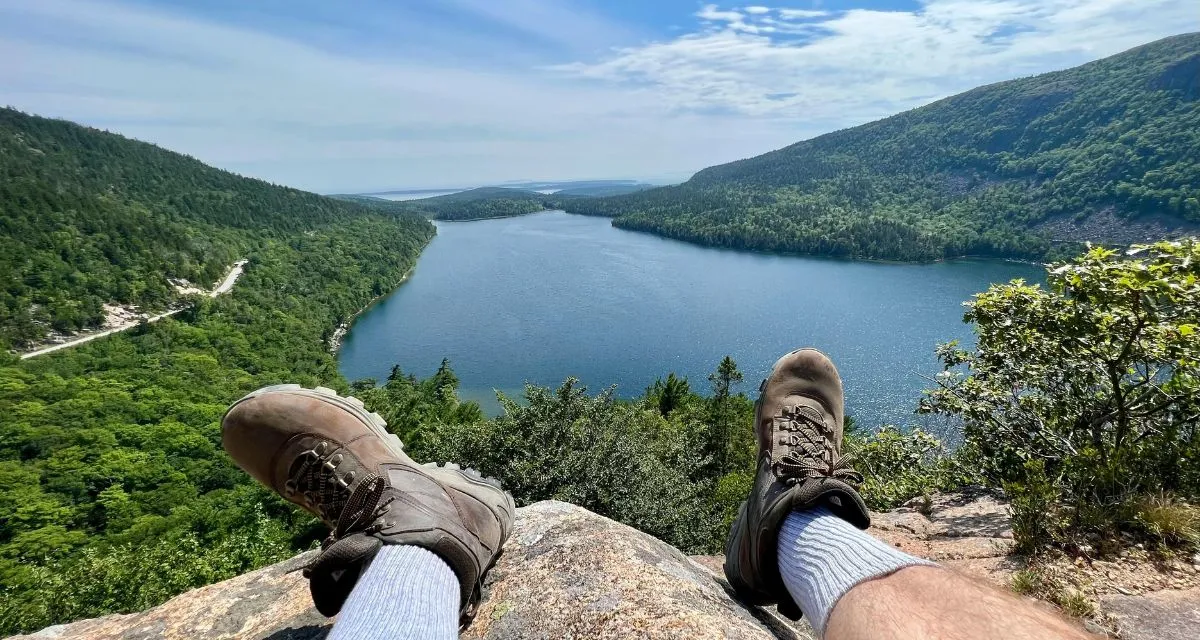
Jordan Pond Path (3.3 miles, Easy, 4.8 stars) delivers exceptional lake views despite potential crowds and narrower wooden walkways. Early arrival ensures parking for this popular four-season trail featuring unique boardwalks, rocky terrain, scenic mountain peaks, and ponds.
Ocean Path Trail (4.1 miles, Easy, 4.7 stars) follows a mostly flat route paralleling the loop road from Sand Beach to Otter Point. This trail offers scenic views and access to rocky shore outcroppings, Thunder Hole, and Otter Cliff. As the park’s most popular running trail, it features cliffs and beaches with optimal early or late arrival times.
Trails with Unique Features (Beyond the Views)
Acadia hikes showcase incredible natural diversity beyond typical mountain views:
Waterfalls appear on 20 trails, including Acadia Mountain and Man O War Trail, St. Sauveur and Acadia Mountain Loop, and Witch Hole and Pond Carriage Trail to Eagle Lake.
Dams feature on 13 trails, including Dorr Mountain Ladder Trail, Norumbega Mountain Loop, and Hadlock Ponds Loop.
Beaches enhance 19 trails, including Beehive Loop Trail, Gorham Mountain Loop, Ocean Path Trail, and Great Head Trail.
Ponds appear on 44 trails, offering serene water features throughout the best hikes in Acadia National Park.
Historic ruins add cultural interest, particularly on Compass Harbor Trail, while 15 trails feature dedicated scenic viewpoints for optimal photography opportunities.
Optimized Itineraries & Crowd Avoidance Strategies
Strategic planning transforms crowded Maine hiking Acadia experiences into peaceful adventures through brilliant timing and route selection.
One Day in Acadia: Maximising Your Visit
Early Morning: Begin with Cadillac Mountain sunrise (permit required), followed by challenging Acadia hikes like Beehive Loop (counterclockwise direction).
Late Morning/Lunch: Explore Sand Beach Region and Ocean Path Trail, including Thunder Hole. Consider scenic lunch spots accessible from Gorham Mountain.
Afternoon: Complete Jordan Pond Path easy loop for Bubbles views, potentially enjoying famous popovers at Jordan Pond House.
Evening: Conclude with dinner in Bar Harbor or Southwest Harbor, such as Beale’s for authentic Maine lobster experiences.
Multi-Day Exploration: Strategic Sector-Based Itineraries
Day 1: Bar Harbor & Eastern MDI focuses on crowd management. Avoid Loop Road parking by using Beachcroft Path Trailhead (arrive before 9 AM) or Island Explorer shuttle. Combine trails around Cadillac Mountain, Champlain Mountain, Dorr Mountain, and Sand Beach, noting Precipice Trail closures for falcon nesting.
Day 2: Jordan Pond Area balances popularity with serenity. Park smartly at Brown Mountain Gatehouse (adjacent to carriage path) to avoid Jordan Pond House crowds. Consider longer Maine hiking Acadia adventures, including Norumbega Mountain, Bald Peak, Parkman Mountain, Gilmore Peak, Cedar Swamp Mountain, Sargent Mountain, Penobscot Mountain, and Bubbles Mountain.
Day 3: The Quietside seeks tranquility by parking at Long Pond trailhead for access to Mansell Mountain, Knights Nubble, Bernard Mountain, Beech Mountain (with fire tower), Flying Mountain, Acadia Mountain, and Saint Sauveur. These trails remain more spread out and less crowded.
Day 4+: Beyond Mount Desert Island explores Schoodic Peninsula’s different, quieter coastal experience with a dedicated visitor centre and campground, plus Isle au Haut’s remote island experience featuring five lean-to sites at Duck Harbor Campground.
Expert Tips for Beating the Crowds
Timing strategies include arriving at popular trailheads before 9 AM or during late afternoon/sunset hours. Shoulder seasons (spring and fall) provide optimal crowd avoidance for the best hikes in Acadia National Park.
Transportation tactics utilize free Island Explorer shuttles to reduce parking stress and explore lesser-known “Quietside” trailheads and sectors.
Route combinations string together multiple shorter trails for longer, less-trafficked Acadia hikes that provide more solitude and diverse experiences.
Beyond Hiking: Other Activities in Acadia National Park
While Maine hiking Acadia represents the park’s primary attraction, numerous other activities enhance any visit.
Biking on Historic Carriage Roads
John D. Rockefeller Jr.’s legacy includes over 45 miles of crushed stone carriage roads featuring 17 stone-faced bridges designed for motor-free travel. “Rockefeller’s Teeth” (granite coping stones acting as guard rails) line these historic routes, with Eagle Lake Carriage Road Trail serving as the most popular biking destination.
Water Activities
Kayaking and canoeing flourish on pristine lakes and ponds, while swimming opportunities include Sand Beach (saltwater) and Echo Lake (freshwater). Ocean water temperatures range from 50-60°F, while lakes and ponds warm to 55-70°F.
Sea kayaking and guided boat tours explore spectacular coastlines for seal and whale spotting, with whale-watching excursions departing from Bar Harbor.
Scenic Drives
The 27-mile Park Loop Road highlights Thunder Hole, Otter Cliff, Jordan Pond, and Cadillac Mountain side road access. Schoodic Peninsula Loop provides quieter, less congested scenic driving alternatives.
Ranger-Led Programs
Available mid-May to mid-October, these programs cover natural and cultural history through walks, hikes, boat cruises, evening amphitheatre programs, and children’s activities. Peregrine falcon and raptor viewings add exceptional wildlife education opportunities.
Winter Activities
Cross-country skiing and snowshoeing transform carriage roads and trails into winter wonderlands. Snowmobiling operates on paved loop roads, while ice fishing targets frozen ponds and lakes.
Wildlife Watching & Nature Photography
Diverse ecosystems support 37 mammalian species (black bear, moose, coyotes), 7 reptilian species, 11 amphibian species, and 215 confirmed bird species (including golden and bald eagles, peregrine falcons). Marine species like seals and whales inhabit the surrounding waters. At the same time, intertidal zones showcase starfish, dog whelks, blue mussels, sea cucumbers, and rockweed.
Acadia’s Rich History & Natural Wonders
Understanding Acadia’s deep history enriches every Maine hiking Acadia experience through cultural and geological context.
A Glimpse into Acadia’s Past
The Wabanaki Confederacy (Maliseet, Mi’kmaq, Passamaquoddy, Abenaki, Penobscot) inhabited this area for over 10,000 years, calling Mount Desert Island “Pemetic.” Samuel de Champlain named the island “Isle des Monts Deserts” (Island of Barren Mountains) in 1604.
Established as Sieur de Monts National Monument in 1916, the area became Lafayette National Park in 1919 and finally Acadia National Park in 1929. George B. Dorr, known as the “Father of Acadia National Park,” proved instrumental in its creation.
John D. Rockefeller Jr. financed and designed the extensive carriage road system from 1915-1940, while the devastating 1947 fire burned over 10,000 acres, significantly impacting the landscape but leading to natural regrowth that shapes today’s forests.
Geology: A Landscape Shaped by Ice and Time
Glacial features include exposed granite domes, glacial erratics (like Bubble Rock), U-shaped valleys, and cobble beaches. Somes Sound, a five-mile fjard nearly dividing Mount Desert Island, formed during glacial periods. Cadillac Mountain’s distinctive pinkish granite, colored by perthite, formed 424-419 million years ago.
Ecology: A Biodiverse Coastal Ecosystem
Nearly barren mountain summits transition through northern boreal and eastern deciduous forests to freshwater lakes, wetlands, and Atlantic shoreline featuring rocky and sandy beaches plus intertidal and subtidal zones.
Over half of Maine’s vascular plant species flourish on Mount Desert Island, including spruce-fir boreal forests, oak-maple-beech hardwoods, and pitch pines. The Wild Gardens of Acadia showcase over 400 indigenous species, while diverse mammals, birds, reptiles, amphibians, and marine life benefit from active conservation efforts, particularly for peregrine falcons.
Essential Tips for a Responsible and Enjoyable Visit
Successful Maine hiking Acadia adventures require preparation, respect for nature, and safety awareness.
Leave No Trace principles emphasize packing out all trash, staying on marked trails, and respecting wildlife from appropriate distances. These practices preserve the best hikes in Acadia National Park for future generations.
Safety considerations include awareness of trail difficulties (rungs, ladders), weather conditions (especially on exposed cliffs), and specific closures (Peregrine Falcon nesting areas). Granite becomes extremely slippery when wet, requiring extra caution.
Stay informed through regular checks of park websites (nps.gov/acad) for current conditions, alerts, and reservation requirements that impact Acadia hikes.
Packing essentials include adequate water, snacks, appropriate footwear with excellent grip, layered clothing, sunscreen, and insect repellent for comfortable, safe hiking experiences.
Conclusion: Acadia Awaits Your Discovery
Maine hiking Acadia represents one of America’s premier outdoor experiences, combining rugged coastal beauty, diverse ecosystems, and rich cultural history into unforgettable adventures. From challenging scrambles up granite cliffs to peaceful lakeside strolls, the best hikes in Acadia National Park offer something extraordinary for every visitor.
This jewel of coastal Maine continues attracting millions of visitors annually through its unique blend of mountain and sea, historic carriage roads, and pristine wilderness areas. Whether you’re seeking solitude on the Quietside, photographing sunrise from Cadillac Mountain, or exploring tide pools along the rocky shore, Acadia hikes create lasting memories and deep connections with nature.
Plan your adventure, respect this precious landscape, and prepare to discover why Acadia National Park stands as one of America’s most beloved natural treasures. Share your experiences and help others find the magic of Maine hiking Acadia adventures.
Reserve your spot easily with GetYourGuide today
Frequently Asked Questions (FAQ)Affiliate Disclosure
Q: Where is the best place to hike in Acadia National Park? A: The Beehive Loop Trail receives the highest rating from AllTrails users (4.9 stars), but many trails offer incredible views depending on desired difficulty and specific features you’re seeking.
Q: What is the longest trail in Acadia National Park? A: Witch Hole Pond, Eagle Lake and Around Mountain Carriage Road spans 25.7 miles, representing the park’s longest single trail experience.
Q: How many trails are in Acadia National Park? A: Acadia National Park features 248 distinct trails, providing an incredible variety for Maine hiking Acadia adventures.
Q: Which trail has the most elevation gain in Acadia National Park? A: Cadillac, Dorr, Pemetic, and Bubbles Loop delivers 4,458 feet of total ascent, challenging even experienced hikers.
Q: Can you drive to the top of Cadillac Mountain? A: Yes, but vehicle reservations are required during peak season (May 21–October 26) for summit road access.
Q: Are dogs allowed on Acadia National Park trails? A: Most trails welcome leashed dogs, but some challenging routes like Jordan Pond Path and South Bubble (iron rungs) and Great Head Trail (large boulders) aren’t recommended for canine companions.
Q: Is Acadia National Park crowded? A: Yes, as one of America’s ten most visited national parks with over 3 million annual visitors, strategic planning becomes essential for avoiding crowds, especially during the summer months.